Visar inlägg med etikett nebulae. Visa alla inlägg

onsdag 18 februari 2026

Where life once evolved.

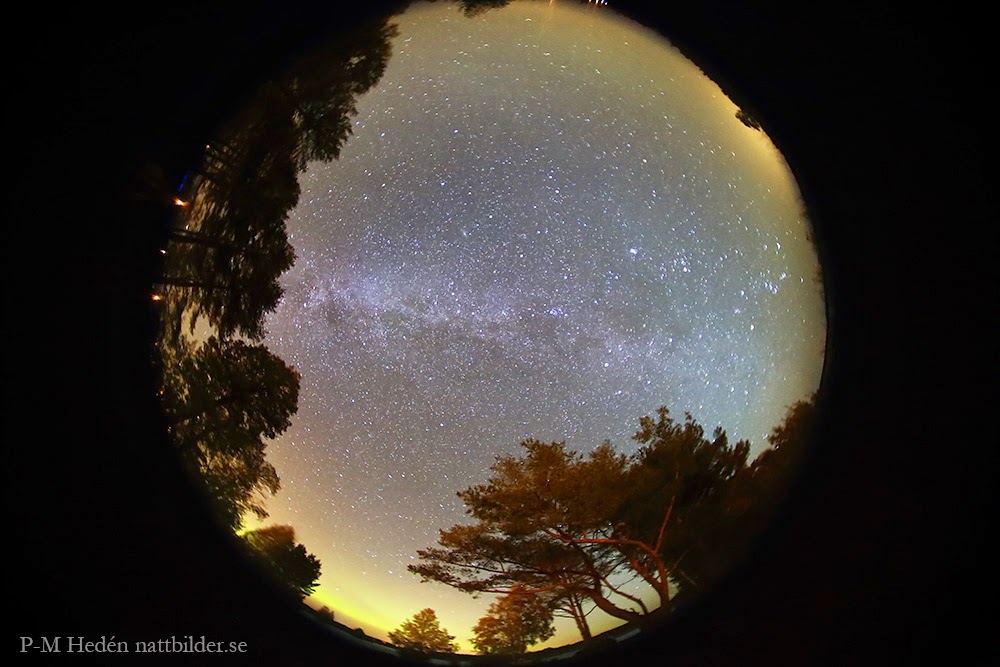
 A clear and cold night by the sea on planet Earth. In the sky, the constellation Orion is visible with the star factory Orion Nebula under Orion's belt, visible to the naked eye. Our star Sun was probably created from a similar star factory long ago. The Orion Nebula (M42) consists primarily of gas and dust, where the absolutely dominant elements are hydrogen and helium. It is an emission nebula that shines because young, hot stars ionize the gas.

The Earth formed about 4.6 billion years ago from a rotating disk of gas and dust that surrounded the young Sun. By clumping together pebbles and cosmic dust, the planet grew. Originally, the Earth was a red-hot melt that cooled and formed a solid crust. Water was added later, probably via comet impacts. The theory of the origin of life is that life on Earth arose in the ocean about 3.5–3.8 billion years ago, probably in close proximity to hot springs on the seafloor where amino acids and simple bacteria were formed. The ocean served as a protective environment for the first organisms before oxygen and the ozone layer made life on land possible. The oldest traces of life are 3.5–3.7 billion years old and are found in marine environments. Early theories focused on the "primordial soup" in shallow sea bays, while more recent research often points to hot springs (hydrothermal vents) in deep water. Complex organic molecules (amino acids) formed in the water and assembled into simple bacteria. These first organisms were independent of oxygen, but later began to produce it through photosynthesis. Evolution started with simple microorganisms, followed by algae, and later the first multicellular animals developed in the sea. The picture shows algae and seaweed that fluoresce via UV light. They are clearly visible thanks to the current record low sea level. Algae contain chlorophyll for photosynthesis. When chlorophyll is hit by UV light or blue light, it absorbs the energy, but cannot use it all. The excess energy is emitted as a red or pink glow. This is called fluorescence and can often be seen underwater with special lighting or when analyzing algae. Under Orion, light pollution from civilization is seen, life has developed into an intelligent species Homo Sapiens Sapiens that eventually invented electricity. The place where the picture was taken, Nothamn Sweden, is known for its geology, 1.9 billion years ago there were explosive volcanoes here that spewed ash and lava over a shallow sea that covered the area. Early forms of life, microorganisms, lived on the seabed, which together built up limestone layers. Iron precipitated in the limestone and layers of iron ore were formed, something that is common throughout Bergslagen. Deep down, beneath the volcanoes, large magma chambers have solidified into the rocks diorite and gabbro. So the rocks in the picture were created during this time.


fredag 1 april 2016

Spring starry sky at Tänndalen

Me and my daughter Maja went out to check out the nightsky at Tänndalen Sweden. We noticed a light low in the north, faint Northern lights. And the Milkyway with Cygnus also low in the north, a beautiful sight. I tried a close up shot of North America nebula and the Butterfly nebula with my 85mm lens and modded 600D, they moved behind treetops like playing hide and seek with me, I did a single shot of 15s.


onsdag 26 augusti 2015

New photos from last weekend with my son

My sons favourite starcluster the Plejades M45 (Seven Sisters). This beautiful open starcluster is easily visible without optics, some might think it is the little Dipper because of the shape. This amazing cluster of stars lies only 440 ly away in the constellation of Taurus. These young stars (only 100million years old) will only stay together for about 250million years and then seperate and become individual stars in our galaxy. You can see blue instellar clouds around the stars in the photo. So it is a beautiful group of young stars that we can enjoy - so get out and do it Smiley smile! Canon 6D and 85mm lens.


Is it not amazing, to be able to see another galaxy without Optics! The galaxy of Andromeda M31 is a beautiful spiralgalaxy "only" 2,5 million ly away. If you know where to look you can see it without Optics At a dark location. Amazing, another Island of stars, probably another place with life and maybe someone is looking At our galaxy from there At the same way. If you look closely you can even see the satellite galaxy below it. Now, you don't see the galaxy like in this photo, the sensor in the camera capture much more, but you will see it as a fuzzy dim oval object in the sky. Photo taken with 85mm lens and Canon 6D.


Airglow and milkyway shots..


måndag 26 januari 2015

Comet Lovejoy and Nebulae

Tried to capture comet Lovejoy better by travel to little bit darker skies, went to Riala 70km north of Stockholm. I could easily see the comet without optics but it was very difficult to capture the tail.
I tried to use a narrowband filter against the lightpollution in the south and this shot shows Lovejoy to the right, the great nebula NGC1499 and the open cluster M45 in the middle, to the left you can see some more nebulae in Auriga.

torsdag 2 oktober 2014

The bright star Merope with nebulosity

Nebulosity around the bright star Merope in the open cluster M45, Plejades. You can also see the little gascloud IC349 just below the star. Photo taken with Celestron Nexstar 11 GPS @ 2800mm and Canon 600D. 

måndag 29 september 2014

Stargazing weekend

What a great weekend by the cabin, lovely nightsky with faint Aurora Borealis and meteors, great Milkyway and great company, my family went along and joined me.
My children looked at M31, M45 and the double cluster with binoculars and it was a great view.


onsdag 27 november 2013

Flamman och hästhuvudet

Dags för lite nebulosor igen.
Denna gång Flamnebulosan och Hästhuvudnebulosan som ligger i stjärnbilden Orion, närmare bestämt så är den ljusstarka stjärnan i bilden den vänstra stjärnan i Orions bälte!
Emissionnebulosor som ligger ca 1500 ljusår bort, själva hästhuvudet heter B33 och är en mörk nebulosa.
Manuellt guidat igen..
En sak som stör mig med Blogger är att det sker någon eländig justering av bilderna vid publicering - som blir till det sämre!! Originalbilden är betydligt bättre..mycket irriterande!
The flamenebula och the horseheadnebula B33 in the constellation of Orion.
Photo taken with Orion 100ED and  modded 600D.


torsdag 29 november 2012

Reaching for the stars

My favourite dead Oak with the Milkyway behind with several nebulas visible, it actually looks like the oak try to reach the stars...

lördag 1 oktober 2011

Fjärilnebulosan med omgivning - The Butterfly nebula widefield

Det är faktiskt rätt märkligt att man kan fånga så mycket nebulositet på en så pass relativt dålig himmel som det är i Vallentuna nära centrum och 30km från Stockholm. Men med smalbandsfilter så sorterar man bort det ljus man inte vill ha - ljuset från alla eländiga gatlampor (läs om hur vi kan hjälpas åt att minska detta på http://www.ljusstyrkan.se/cms/) som är felriktade och i många fall helt onödiga. Ljusföroreningar påverkar också djurlivet negativt. Jag tycker också att djurarten Homo Sapiens påverkas negativt.

Många av oss ser inte stjärnhimlen längre och jag anser att vi blir vilsna, vet inte vart vi verkligen befinner oss och missar den kosmiska resa vi är med på. Istället pumpas vi med falska ideal och strävar efter att bli en "Idol" :-) och ser gärna inte hur det ser ut på vår planet i stort.

Helt fel linje för att överleva som art och för att vår planet ska överleva http://sv.wikipedia.org/wiki/Jorden.

Vi har redan nu gjort av med vår planets resurser för i år, i Sverige behöver vi 3 jordklot som vi spenderar och i betydligt större länder 5 jordklot....


Jag vet inte men....det känns så där...

Nåväl, bilden visar nebulositet runt Fjärilnebulosan som man kan se vid den starka stjärnan Sadr i stjärnbilden Svanen.


The Butterfly nebula IC1318 widefield with nebulosity in the constellation of Cygnus.

måndag 29 augusti 2011

192 min


Från skogen i Riala till observatoriet i Vallentuna.
I stjärnbilden Svanen ligger dessa två gigantiska nebulosor 1600 ljusår bort. Det har blivit lite av en tradition för mig att fotografera dessa varje år. Kanske lite uttjatat inom kåren men på något sätt så vill man få till det lite bättre hela tiden. När det gäller "deepsky" fotografering så kan man nog säga att ju mer exponeringar man har på ett objekt desto bättre. Denna natt fick jag till 192 minuters exponering för endast denna bild - och jag måste få tillägga att det var manuellt guidat (!), vet inte om det finns någon annan astrofotograf som gör detta fortfarande.
Dessa exponeringar i kombination med en ganska fin himmel för att vara i Vallentuna, jag kunde skönja bandet av Vintergatan hemma - det är inte så ofta kan jag säga, gjorde så att denna bild blev ganska bra måste jag få påstå.
Till skillnad från i lördags då jag missade att spela in en eventuell varg så fångade jag en Pelikan på bild igår - ett pelikanhuvud iallafall.
Det är vad den högra nebulosan kallas för, den liknar huvudet av en pelikan. Till vänster om pelikanen ligger Nordamerikanebulosan som påstås påminna om nordamerikanska kontinenten i formen.
Känns märkligt att fotografera något man inte ens ser...
Nåväl, tror att denna bild är den bästa jag har tagit hittills på detta par, kanske blir det ännu bättre framtiden. Bilden är tagen med en "moddad" systemkamera, en Orion 80ED @ 420mm och Ha-filter.

192 minutes of manual exposures using Orion 80ED @ 420mm, modified DSLR and Ha filter. The two great nebulas in Cygnus NGC 7000 & IC 5067.