Visar inlägg med etikett Jupiter. Visa alla inlägg

tisdag 21 april 2026

Folding pattern by the sea and Jupiter

Fluorescent limestone in red, calcite, in a folding pattern by the sea. Folding patterns in rocks are primarily created through plate tectonics, where the Earth's crust plates collide and compress the bedrock over millions of years. This process, called folding, occurs when rocks are subjected to enormous pressure and temperature conditions, causing them to bend and fold instead of cracking. 

In the sky, the planet Jupiter is seen next to the bright stars Castor and Pollux.


måndag 6 april 2026

Moon and Jupiter


A clear night in the Swedish mountains where the starry sky is free from light pollution. The bright planet Jupiter lies to the left of the moon this evening with the stars Castor and Pollux obliquely up to the left of Jupiter. Obliquely up to the right of the moon is the star Capella in the constellation Auriga. Below the moon and Jupiter is the constellation Orion with the bright star Sirius far down to the left. Around the moon are thin clouds that almost create a complete halo.

tisdag 31 mars 2026

Fantastic Aurora display

A magical night in the Swedish mountains. It started as a green glow in the north that developed into an arc that then increased in strength and went higher in the sky, finally to the zenith with curving green waves of light. The green glow flashed across the entire sky as if the atmosphere was shaking.

The northern lights (aurora borealis) affect the Earth's atmosphere, mainly in the upper layers such as the thermosphere and the ionosphere. The phenomenon occurs when charged particles from the sun collide with oxygen and nitrogen in the atmosphere at the magnetic poles. Main effects of the northern lights on the atmosphere: Energy input and heating: The northern lights are the result of an enormous energy input from the solar wind to the atmosphere. This causes local heating in the upper layers of the atmosphere. Electric currents: In connection with the northern lights, strong electric currents arise in the atmosphere, so-called auroral electrojet streams. These currents can affect the Earth's magnetic field. Ionosphere disturbances: Aurora activity can affect the ionosphere (the part of the atmosphere that is ionized), which in turn can disrupt radio communications and satellite navigation. Faint moonlight via a fine crescent moon and bright planet Jupiter also visible.


lördag 28 februari 2026

Like glowing jewels and Starry Sky

A beautiful view of the coast of Väddö, Sweden. On the ground, algae and seaweed stuck in the ice fluoresce like glittering jewels thanks to UV light. A cold night with beautiful Icelandic scenery and low water. In the sky, the bright star Sirius is also reflected in the water. Sirius, often called the Dog Star, is the brightest star in the night sky with an apparent magnitude of -1.46. Located in the constellation of the Great Dog (Canis Major) and only 8.6 light-years away, it is one of Earth's closest neighbors. It is part of a double star system (Sirius A and B) and is easy to find in the winter sky by extending Orion's belt. The planet Jupiter also shines as a bright star high in the center of the image. To the right, the constellation Orion is visible. Between Orion and Jupiter, our Milky Way galaxy is seen as a faint band.

We live on a beautiful planet.

Let's take care of it and each other - stop these insane wars and misery. It is up to us, the people!


tisdag 3 februari 2026

Lichens with Jupiter and lightpollution

Bright planet Jupiter in the night sky on this clear and cold evening. In the foreground is a birch with lava in different colors as I have used UV light to create fluorescence. Lichens on birch are usually harmless, superficial organisms that use the bark as a base without damaging the tree, often a sign of clean air. Common species include blue lichen and various crust lichens. Lichens do not penetrate the bark, do not cause rot and can benefit biodiversity by offering food to insects. The bright night sky is due to light pollution, caused by excessive or misdirected artificial night lighting, disrupting ecosystems, disrupting the circadian rhythm of humans and animals and obscuring the starry sky. It is a rapidly increasing environmental problem that negatively affects biodiversity, insect and bird migration patterns, and can be counteracted by targeted, warm white lighting, motion sensors and timers


lördag 31 januari 2026

Snow Moon and Planet Jupiter


A dramatic scene in the sky as clouds obscure the snow moon and the planet Jupiter. If you look closely at Jupiter in the right corner, you can also see three of its moons. The light is refracted in the clouds, creating beautiful colors.
When moonlight hits water droplets in clouds or rain, the light is refracted and reflected, splitting the white light into all the colors of the rainbow (red to violet). This optical phenomenon is called dispersion and occurs when light rays pass through the surface of the water droplets, bounce off the back, and are refracted again.


måndag 5 januari 2026

Moonlit snow crystals


97% moon and the bright planet Jupiter next to it. In the cold snowy landscape, small crystals of different colors are seen in the snow taken with a macro lens. Even the two-bright stars Castor and Pollux are seen above the moon.
Snow crystals appear in different colors primarily due to light interference (thin films, prisms) or contamination, with thin-film interference causing iridescent blues, purples, and rainbow hues from light reflecting off layers, while contamination from algae (watermelon snow, green) or dirt/pollen creates vibrant reds, greens, and even blacks, altering the crystal's pure white appearance


måndag 15 december 2025

söndag 14 december 2025

Orion rising


Bright planet Jupiter with the stars Castor and Pollux above (left), constellation Auriga and Taurus (middle) with the open cluster M45 Plejades (right), and constellation Orion rising from the ocean. Additionally, there is also heavy airglow visible to the naked eye. Airglow is a faint emission of light by a planetary atmosphere. In the case of Earth's atmosphere, this optical phenomenon causes the night sky never to be completely dark, even after the effects of starlight and diffused sunlight from the far side are removed. This phenomenon originates with self-illuminated gases and has no relationship with Earth's magnetism or sunspot activity, causing aurorae.

On planet Earth  

Feldspar, sometimes spelled felspar, is a group of rock-forming aluminium tectosilicate minerals, also containing other cations such as sodium, calcium, potassium, or barium. The most common members of the feldspar group are the plagioclase (sodium-calcium) feldspars and the alkali (potassium-sodium) feldspars. Feldspars make up about 60% of the Earth's crust and 41% of the Earth's continental crust by weight.

Feldspars crystallize from magma as both intrusive and extrusive igneous rocks and are also present in many types of metamorphic rock. Rock formed almost entirely of calcic plagioclase feldspar is known as anorthosite. Feldspars are also found in many kinds of sedimentary rocks.


tisdag 11 april 2017

Moon and Jupiter


A beautiful sight in a small telescope, the moon with planet Jupiter together. Live I also saw the moons around Jupiter, this was too hard to photograph without making the moon way overexposured.

tisdag 1 mars 2016

Winter nightsky

Winter nightsky with the constellation of Orion above a river at Färnebofjärdens nationalpark, planet Jupiter to the left.


onsdag 28 oktober 2015

Morning planets - triple conjunction

A very nice sight early in the morning, the conjunction between Mars (faint left), Venus (middle) and Jupiter (upper right). Look east early in the morning, this photo is taken around 05.15 local time.


måndag 23 mars 2015

Zodiacal light and Starry Sky

Clear skies Saturday night so me and my son went out in the nationalpark of Färnebofjärden. We did a campfire and waited for the darkness to arrive. On the way we enjoyed a crescent moon with earthshine, very nice. Before astronomical twillight we noticed the nice light of the zodiacal light read more in the west, just above planet Venus and towards the open cluster M45.
And as ususal the photos get autocorrected very bad at the blogg!


torsdag 12 mars 2015

A quick photosession

At last out in the dark again. I did a quick photosession by the lake Erken, still frozen even though the spring is around the corner. When I arrived I notices a faint Aurora Borealis low in the north. The Milkyway in Cygnus seems to dive in the lights. Later on I met this beautiful old oak with parts of it

unfortenaly below on the ground. to the left of the oak you see planet Jupiter.

tisdag 19 augusti 2014

Morning planets

Jupiter and Venus together in the morning sky, I managed to capture them between clouds this morning 04.00 local time.

måndag 10 mars 2014

Some new photos

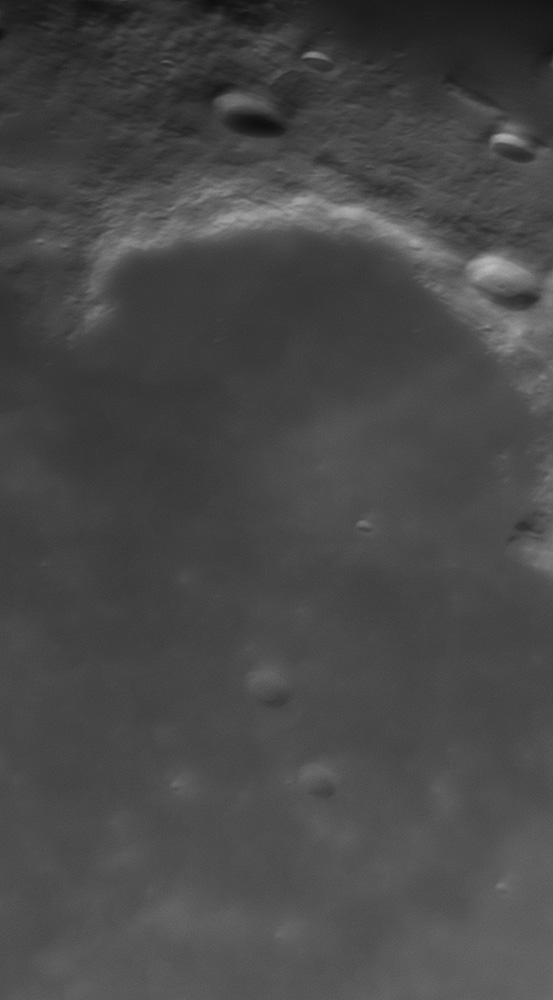
I pushed my NexStar11 at very high focallenght and I only have a DSLR so it is hard getting sharp photos at these focallenghts. Anyway, one shot shows planet Jupiter with a shadow from one of the moons, you can see the moon to the right, this is a single exposure. Another photo shows a close up photo of mountains (Apennines) at the moon, to the right of Mare Imbrium and another shot shows the halfmoon.
Unfortenaly Blogger destroyes the photos with some automatic photo adjustments??